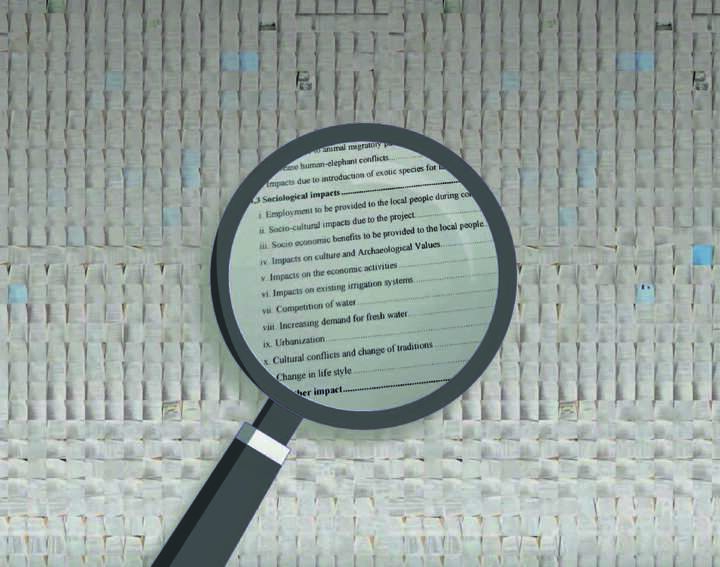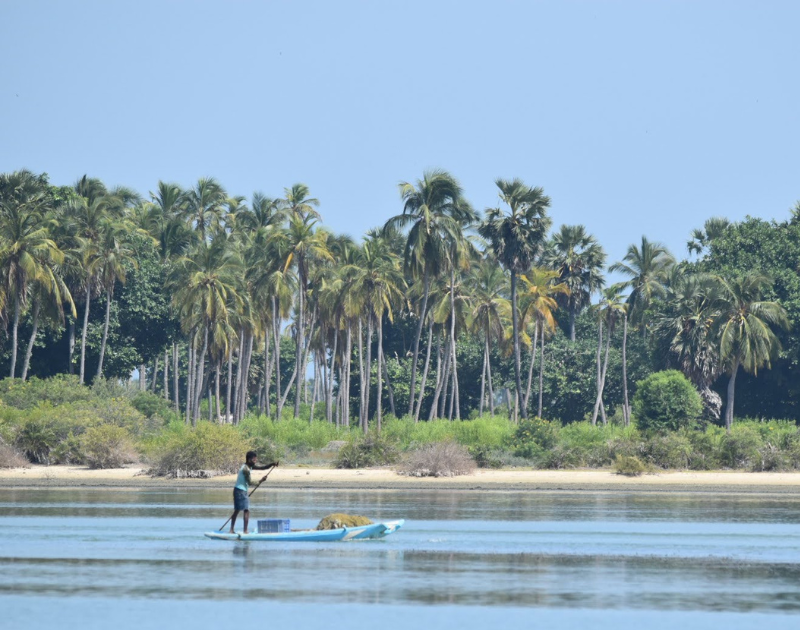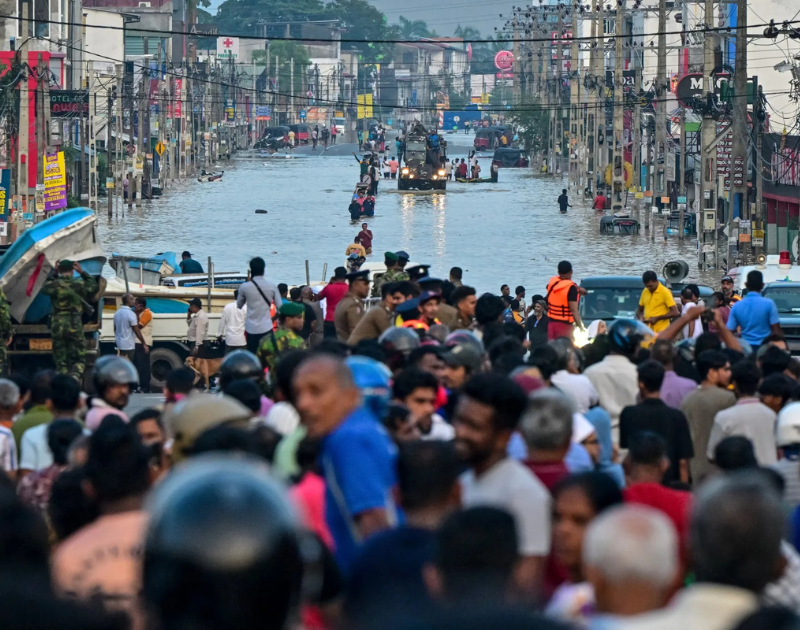

Two days before the Sri Lankan cricket team crashed out of the ICC T20 Cricket World Cup, Sri Lanka Cricket faced a different blow – the construction of the Jaffna International Cricket Stadium was suspended for failing to conduct an Environmental Impact Assessment (EIA). This is merely the latest controversy surrounding a large infrastructure project where the EIA (or lack thereof) has entered the public spotlight. But a new study by Centre for a Smart Future (CSF) shows that it is not only about whether or not EIAs are conducted, but the quality of those EIAs is in question – especially in how they report social impacts.
Since their introduction, Sri Lankan EIA reports have consistently contributed to debates in both courts of law and the court of public opinion. The purpose of an EIA is to proactively identify and mitigate the consequences of environmentally significant projects. Crucially, the “environment” that EIAs evaluate encompasses more than just natural resources and biodiversity; it also includes the socio-economic and cultural landscape. So, it serves as a vital instrument for balancing developmental priorities with environmental protection and safeguarding local communities.
However, Sri Lankan EIA reports have often been criticised for their poor quality. As far back as 2007, a study on the ecological aspects of EIAs found that none of the reviewed assessments provided statistically rigorous analyses, which are necessary for quantitative, testable predictions of impact, followed by appropriate post-impact monitoring. Our study’s focus was specifically on the quality of socio-economic assessments in EIAs – a topic that has received much less attention – and we find some major gaps. It is not surprising, then, that communities impacted by projects often highlight critical gaps that appear after projects are approved.
As Sri Lanka embarks on a series of ambitious new projects and investments, the country cannot afford to make decisions based on substandard EIAs when its people are becoming increasingly vulnerable, and its natural resources are rapidly depleting. But our study finds that the quality of social impact analyses in EIAs is chronically poor, and the solutions to address this challenge lie with many stakeholders involved in the EIA process, including regulators and EIA consultants.
Why does this matter?
What many people tend to overlook is that an EIA has become more than just a mandated ‘environmental clearance’ for a project. Although it may be designed to be one step within a broader approval framework, EIAs have de facto become a signal of overall project approval. A wide range of stakeholders now rely on these documents both before and after the project approval stage. Beyond the approving authorities, stakeholders such as financial institutions, development partners, and the judiciary all utilise EIA reports to make pivotal decisions regarding the future of infrastructure projects.
The EIA process also provides a rare opportunity for the public, including communities potentially impacted by a project, to raise concerns and clarifications when draft EIA reports are presented for public review. Civil society organisations and journalists also use this opportunity to bring critical considerations to the public’s attention.
This widespread reliance on EIAs as a primary information source only compounds the harm caused by poor-quality reporting. As demonstrated by projects like the Uma Oya Multipurpose Development Project, flawed analyses can lead to wasteful public spending and deep-rooted damage to both the environment and vulnerable communities.
Incomplete reporting of critical information
The CSF study, which analysed 250 EIA reports covering the period 1991-2025, found significant deficiencies in the information reported. Despite being required by national EIA guidelines and individual Terms of References, 45% of the reports failed to explain how they identified and measured impacts, and 79% of the reports proposed mitigation measures for identified impacts without explaining their effectiveness.
Beyond these missing details, much of the information in these reports is difficult to verify. When assessing the baseline socio-economic environments, only 10% used analytical studies beyond the authors’ own interpretations and descriptive statistics to justify observations. From the studies that have conducted surveys of local communities, 18% have not provided critical information such as the sample size or the survey timeframe required to verify the validity of survey findings.
Lack of substance and lazy analysis
CSF’s research shows a concerning trend where identical impact descriptions are used verbatim across reports for significantly different projects, casting serious doubts on the reports’ integrity. For example, the EIA for the 2010 Kuchchaveli Tourism Development Project and the EIA for the 2012 Kalpitiya Eco-Friendly Chalets report contain the exact same descriptions of negative socio-cultural impacts, word for word.
A description on socio-cultural impacts caused due to migratory workers – which states that “migratory workers might get involved in clandestine relationships with the ladies in the area, creating problems and conflicts between the permanent dwellers and migratory workers” – appears nearly verbatim in 5 different EIA reports from 2016 to 2025. And not all were by the same EIA consultant either – one of the five was by a different consultant. Such “copy-pasting” weakens credibility of the EIA, and adds length without adding insight.
Given the rise of AI-generated content, if these attitudes toward compiling critical documents remain unchecked, future reports will only become more verbose and less useful.
Many reports also claim various benefits regarding employment and property values with little to no rigour or justification. Some reports even list voluntary Corporate Social Responsibility (CSR) initiatives as project benefits, even though these are at the developer’s discretion rather than direct effects of the project itself.
With all these adding verbosity instead of substance, EIA reports are becoming excessively long. Some exceed 500 pages without annexures, far surpassing the 100-page limit recommended by the Central Environmental Authority (CEA) guidelines.
Harmful framing of issues and narratives
Not all decision-making stakeholders are familiar with the project site and the surrounding environment, meaning the EIA report itself serves as their primary window into the local context and considerations. This grants EIAs significant power to frame social issues and perpetuate narratives that, if made improperly, can worsen power imbalances and social prejudices. This reality imposes a duty on EIA preparers to be meticulous in how they assess and communicate social impacts.
However, some EIA reports over the years reveal a lack of training in the fundamentals of socio-economic research. For example, the EIA report for the Wirawila Walk Inn claimed that “the possessive tendencies, aggression, and the disdain for the law found in every frontier community can be seen here to a certain degree….In such a situation, the impact from the incoming project workers will be insignificant.” In this instance, a sweeping generalisation about a community is used to justify the insignificance of a potential project impact.
Other reports frame the political implications of project activities as potential impacts, even though it is strictly beyond the scope of an EIA. The 2014 EIA for the Mirijjawila Industrial Zone claimed that a growing labour force might encourage trade unions and “extremist political activities,” which would supposedly pose a “serious threat” to the functioning of investments in the area.
More scrutiny and better training needed
Improving EIA report quality requires a two-pronged approach: 1) increasing scrutiny of social impact reporting and 2) providing better training for socio-economic analysis. Regulatory authorities, led by the CEA, must establish consistent quality control mechanisms and update guidelines for preparing EIAs. This must include better access to socio-economic expertise and training programs.
Development partners and financial institutions that finance these projects must provide additional oversight by creating quality control mechanisms, such as rapid assessment toolkits, to evaluate EIA reports during the lending process. Incorporating such considerations at the point of lending can nudge consultants toward higher-quality reporting. The public can also assist by raising quality-related concerns during the official review periods.
Ultimately, EIA consultants must be more responsible. Their capabilities for meaningful socio-economic analysis must be improved. Specialised training is needed regarding the scope of social assessments, best practices for empirical research on primary data, and standards for information disclosure and referencing. Those that continue to produce shoddy reports must be red-flagged by project approving authorities
Stop batting with our eyes closed
The reality is that any large-scale development will cause some level of impact towards communities and natural resources. The decision to go ahead with a project requires careful analysis of the trade-offs. A robust EIA is a critical tool at this stage, not only to filter out proposals that might cause more harm than good, but also to proactively revise and redesign projects to minimise potential harm. So an EIA should not be a mere checkbox, but a rigorous analysis that will productively engage with all relevant stakeholders. If not, we are all just batting with our eyes closed.
—
Senith Abeyanayake is a Research Associate at Centre for a Smart Future (CSF). The Research Report on which this article is based – ‘Assessing the Assessments: An Analysis of Social Impacts Reported in Environmental Impact Assessments (EIAs) in Sri Lanka’ (January 2026) – is available here.