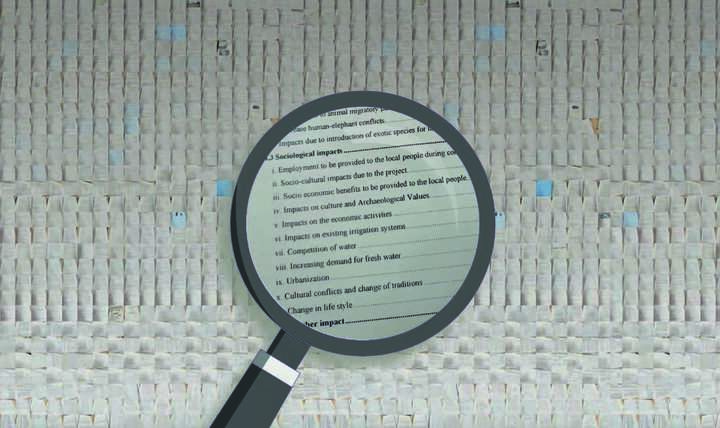

Environmental Impact Assessments (EIAs) are meant to anticipate and minimise harm to communities and nature, but CSF’s new report finds that the quality of social impact reporting in EIAs is low, making EIAs unreliable for decision-makers and investors to scrutinise and use. The report titled, ‘Assessing the Assessments: An Analysis of Social Impacts Reported in Environmental Impact Assessments (EIAs) in Sri Lanka’, is the first systematic assessment of its kind in Sri Lanka, reviewing 250 EIA reports from 1991 to 2025 and assessing them against quality requirements drawn from national EIA guidelines and project-specific Terms of Reference (ToRs).
Our findings indicate that:
The report highlights the urgent need to strengthen the quality control apparatus of the EIA process, to improve training and awareness of consultants, and to increase accessibility of EIAs to the public. It provides immediate recommendations, including the revision of existing EIA guidelines and streamlining the drafting of ToRs.
CSF has already begun engaging with key government agencies involved in the EIA process to inform and influence the necessary reforms.
Read short trilingual summaries of the report here: English, Sinhala, Tamil.
Free data set for research use: CSF is also publishing a comprehensive dataset for use by researchers, CSOs, and other interested stakeholders, to conduct further study and for use in other advocacy. The dataset includes key variables constructed for the 250 EIA reports which were analysed. This dataset can provide crucial descriptives on the sample of EIA reports and can be a foundation to construct other datasets. While every effort has been made to ensure the accuracy of the information presented in the dataset, the author(s) and Centre for a Smart Future (CSF) make no warranties or representations regarding the completeness or accuracy of the contents. Any errors or omissions are regretted.