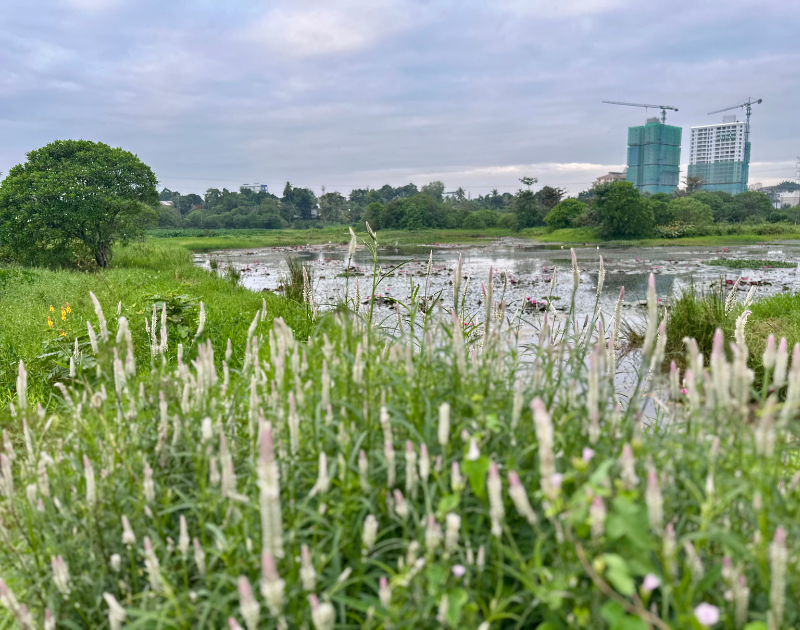

As demand for housing accelerates in Colombo, real estate development is increasingly drawn towards the suburbs that have extensive wetlands, paddy lands, lakes and green spaces. This is often marketed as ‘green living’, yet this expansion threatens these ecosystems that make such developments attractive to begin with. CSF’s new report ‘Shifting Grounds: Unpacking the Tensions between Real Estate Development and Nature in Colombo’ examines this paradox of ‘green living’ and the destruction of natural spaces through the lens of one of Colombo’s nature-rich suburbs – the Thalangama Lake and its surrounding neighbourhoods.
This new report finds that city planning in Colombo has long been reactive, responding to the growing demand for housing and infrastructure driven by rapid urbanisation. Medhini Igoor (Researcher at CSF), the report’s lead author notes, “It is crucial to adopt an integrated approach that recognises nature as a non-negotiable part of urban development – one that underpins climate resilience, social well-being, and long-term liveability”.
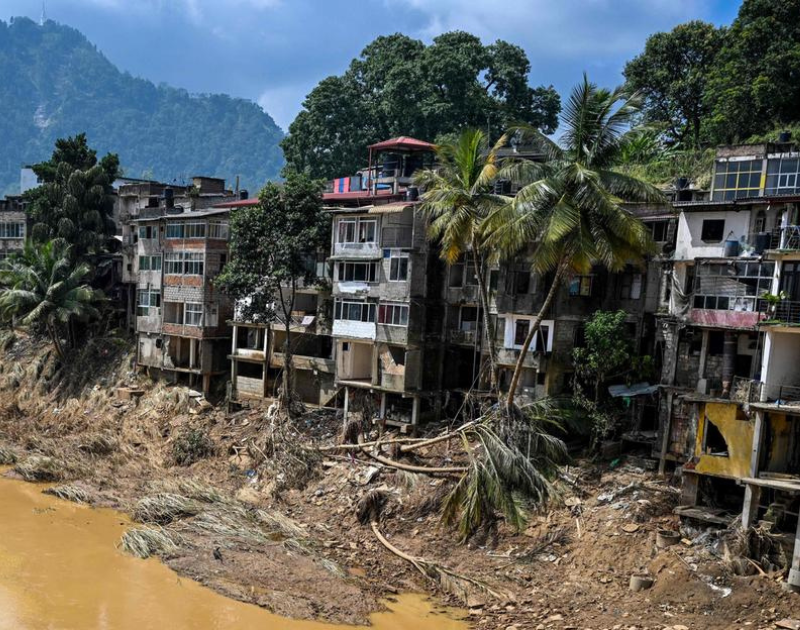
The findings of the report are especially relevant now post Cyclone Ditwah. While many parts of the country have suffered extensive damage to life and property, post-disaster discussions have largely missed Colombo’s high vulnerability to floods. A recent analysis on the impacts of the cyclone shows that many areas within Colombo District, particularly the suburbs, recorded some of the highest exposure and vulnerability in the country – primarily due to high populations living in low-lying, flood-prone areas.
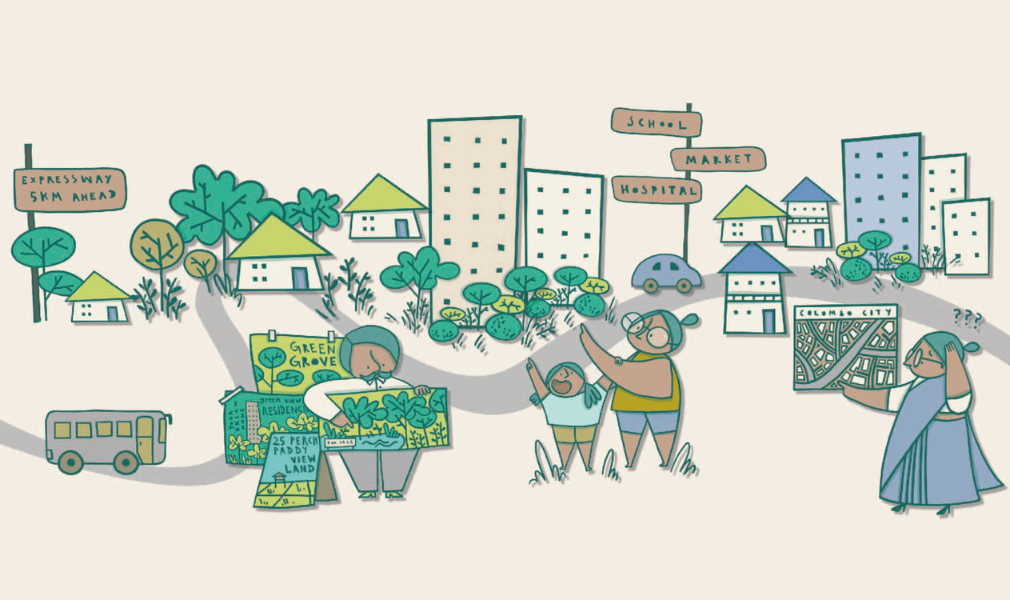
Drawing on a mix of desk research, policy analysis, and qualitative research with real estate developers, government urban planning officials, and residents, the study unpacks the complex and often contradictory forces shaping the interface between real estate development and the natural environment. Factors like buyer preferences for housing in suburbs and resulting nature-themed marketing by developers, infrastructure-led growth and fragmented city planning have accelerated land-use conversion in these suburbs, exposing ecologically sensitive landscapes to mounting urban development pressures. The research also highlights significant policy gaps at the nexus of real estate development and nature, such as overlapping institutional mandates, legal loopholes, and weak environmental approval processes.
The report finds that city planning in Colombo has long been reactive, responding to the growing demand for housing and infrastructure driven by rapid urbanisation. By bringing together development trends, policy analysis, and most importantly, lived experiences of residents, the report offers timely policy, planning and governance recommendations to ensure more equitable and sustainable pathways for Colombo’s urban future. Crucially, the report argues for a more integrated approach to urban growth and emphasises the need to recognise green spaces as critical urban infrastructure that supports climate resilience, social well-being, and long-term livability.