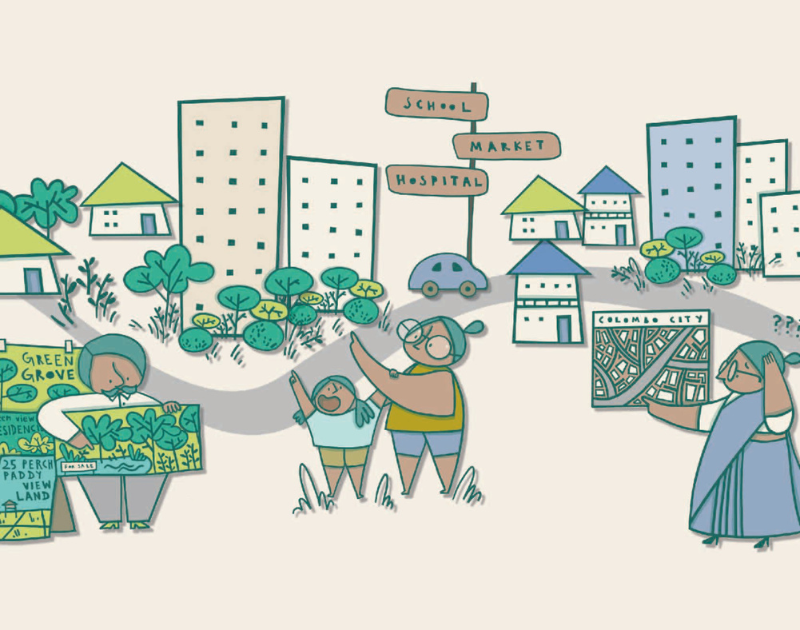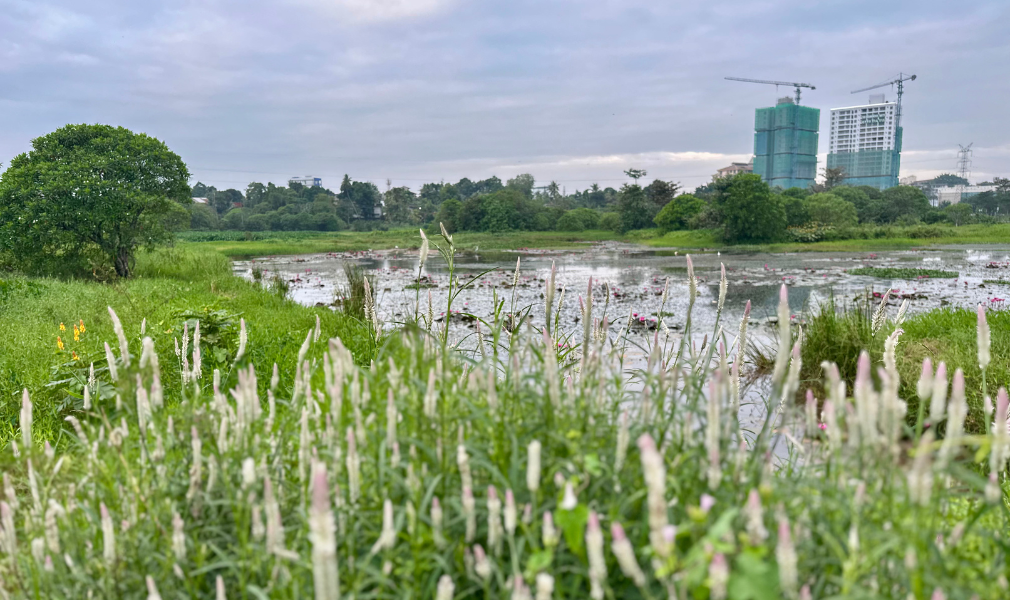

Drive along Lake Drive in Thalangama and you’re met with billboards selling “lakeside serenity” and “blue-green living.” The irony is hard to miss. These glossy promises market the very nature they are actively helping to erase. This is the paradox at the heart of Colombo’s development crisis: a city that sells wetlands as sought-after amenities, even as they are drained and buried beneath concrete foundations.
The numbers tell a stark story. Colombo has lost over 80% of its green spaces in just three decades. Where wetlands once filtered water, buffered floods, and sheltered migratory birds, high-rise condominiums now promise “scenic paddy views” – views that won’t exist in another decade if current trends continue. Data collected by CSF shows that properties overlooking Thalangama’s protected wetlands command price premiums of up to 20%, creating perverse incentives to build as close to nature as legally – or illegally – possible.
The Thalangama Environmental Protection Area (EPA) captures these tensions with striking clarity. Despite being legally protected, internationally recognized as part of a Colombo wetland complex that has accreditation from the international Ramsar convention on wetlands, and deeply valued by residents who chose the area for its tranquility and greenery, Thalangama remains under constant pressure. Jurisdiction is fragmented across eight government agencies, yet no single authority is responsible for day-to-day oversight. The result is a slow erosion of protection: paddy lands are quietly filled using “abandonment” loopholes, lands are rezoned in the name of “vital infrastructure,” and enforcement occurs only after sustained community outcry forces official intervention.
This is not a matter of aesthetics or nostalgia. Wetlands are Colombo’s ultimate climate insurance policy. These ecosystems absorb floodwaters that would otherwise inundate homes and businesses. They cool neighbourhoods trapped by urban heat islands, store carbon, purify water, and sustain the biodiversity that underpins the city’s ecological balance. When wetlands are filled to make way for apartments, the loss goes far beyond scenic views – it actively dismantles Colombo’s natural defences against the climate crisis.
The current governance framework cannot protect what remains. Fragmented authority means developers can shop for approvals, exploiting gaps between agencies. Environmental impact assessments are required only for large projects (over 10 hectares for residential development), allowing almost all condominium developments to proceed unchecked. Their cumulative impact which is measured across the landscape and over temporal scales is never assessed. Meanwhile, city plans treat green spaces as afterthoughts while simultaneously designating the same areas for “residential mixed use”, and regional plans map conservation zones in as clusters outside the city itself.
Yet there is hope in resistance. When authorities attempted to push an elevated highway – intended to connect Colombo to Athurugiriya – through the Thalangama EPA in 2021, residents mobilised. They organised, filed cases, and ultimately won. Four years later, the project has been cancelled. Today, community groups continue that vigilance, patrolling the wetlands, removing illegal advertisements, and monitoring encroachment. But this remains an uphill battle for green spaces that lack strong protective status, as illustrated in Rajagiriya, where a newly proposed 12-storey apartment block on Lake Drive on land recognized as marshland, has raised questions around proper approvals and environmental clearances.
On World Wetlands Day 2026 today, this moment should serve as a vital reminder. Colombo needs integrated planning that treats wetlands not as vacant lots awaiting development, but as essential infrastructure. That means transparent zoning data, coordinated governance across agencies, mandatory environmental assessments for all high-density developments, and real penalties for violations. Most urgently, it requires recognising that “green living” cannot remain a marketing gimmick – it must become a development philosophy guiding the future of Colombo’s real estate landscape.
The wetlands that make Colombo beautiful are the same ones that keep it safe, cool, and liveable. Nature-adjacent development is possible but only if we stop trying to conquer nature itself. The choice is ours: preserve the ecosystems that make Colombo resilient, or watch them vanish beneath the very developments that once valourized them.
This is a special op-ed by Centre for a Smart Future (CSF) marking World Wetlands Day, February 2, 2026. CSF recently published an in-depth report on the crisis in Colombo’s wetlands amidst rapid and unplanned real estate development, based on months of field research and desk-based analysis. Read it here – ‘Shifting Grounds: Unpacking the Tensions between Real Estate Development and Nature in Colombo’.
Cover image copyright Anushka Wijesinha (c) 2025