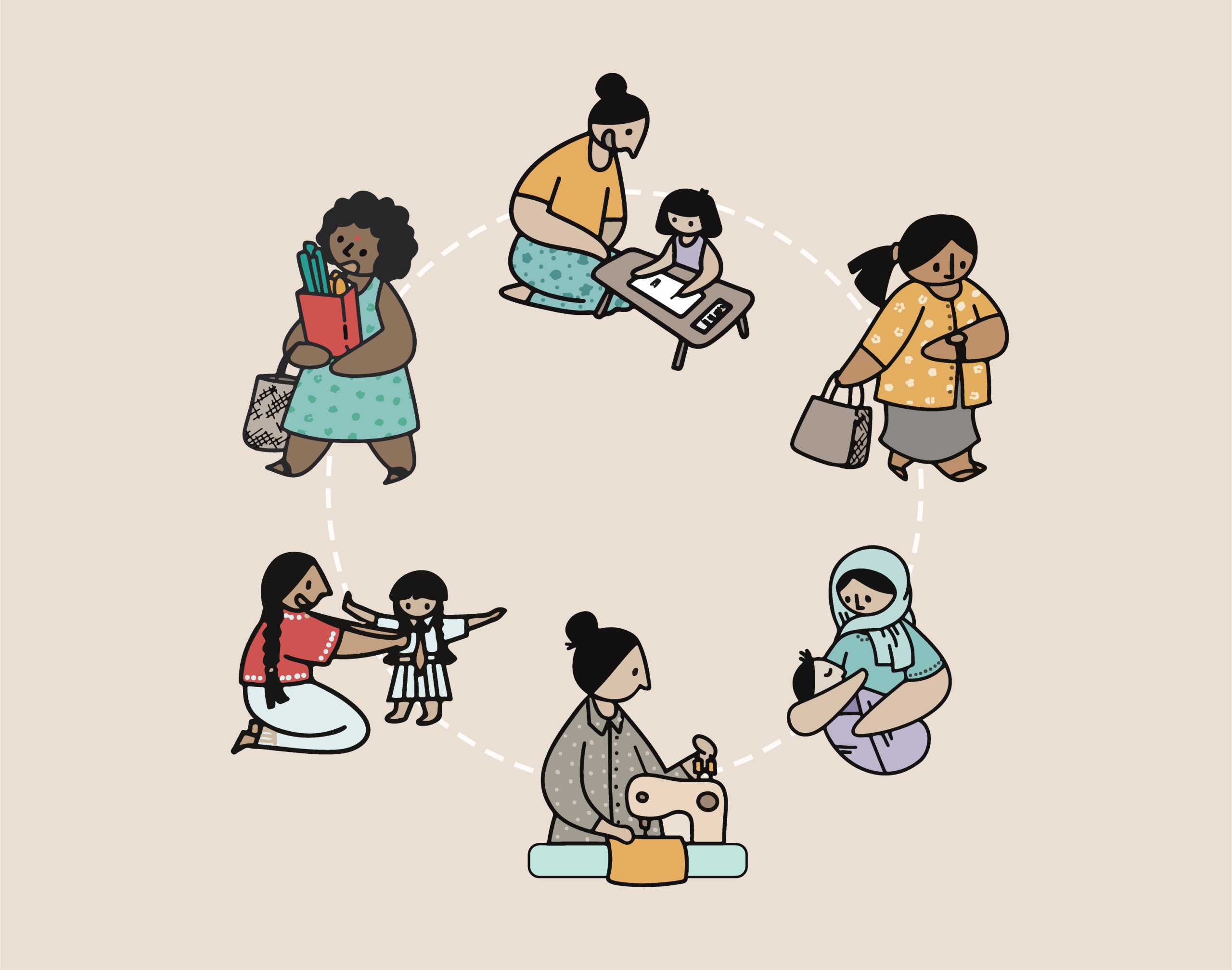

Cities and economies in the Global South are able to function efficiently because of the essential care work performed by women every single day. Whether it be cleaning, cooking or caring for children, elders, the disabled and ill, care work is essential, but often goes invisible, unnoticed and unrecognised. This has resulted in infrastructures of care such as daycares and creches not being recognised as essential services and public infrastructure, in planning and in policy. Rarely is infrastructure available, publicly funded, and widely accessible. This forces women to take one of two paths: either to forgo employment and provide care full-time, or to outsource care. As such, paid domestic work becomes an essential service and a critical infrastructure of care, especially within cities. According to the 2024 Labour Force Survey, Colombo’s female labour force participation lies at a mere 29.5% and women in urban areas spent almost 4 times the amount of time on unpaid domestic and caregiving labour than their male counterparts. There is a demand for care services, not only to enable women to enter the workforce but also to relieve them of their time poverty. Colombo Urban Lab’s research in Colombo’s working-class communities reveals that not only do domestic workers enable middle and upper-class women to engage in the formal labour force, but they also provide essential support to hold together the fragile care systems in cities.
Even though domestic workers fill the gap in care left by the lack of care infrastructure among other services they provide, they rarely receive essential social security benefits. As they are considered to be workers in the informal sector, domestic workers are not entitled to the same benefits accorded to employers in the formal sector; this includes the guaranteed minimum wage of LKR 17,500 a month (per the National Minimum Wage of Workers Act No 3 of 2016), paid time-off, maternity, sick or casual leave. They are also not entitled to pensions and EPF/ETF. Domestic workers are also not subject to regulations regarding occupational and working conditions and safety. Employer responsibility is also unclear and unregulated due to the wide range of work domestic workers perform, as well as the different work times and arrangements that they might have with their employers (for example, working only a day shift versus working as a live-in worker).
Even though the care needs of the upper and middle classes are fulfilled by domestic workers, the care needs of domestic workers themselves continue to persist; domestic workers leave their own children alone at home or with their mothers, daughters, neighbours or other female relatives. They have to do the cleaning, cooking, eldercare and all sorts of other unpaid labour in their own homes, while doing the same for another household. The burden of care thus does not disappear but simply is transferred and shifted down class lines.
Domestic work in Colombo
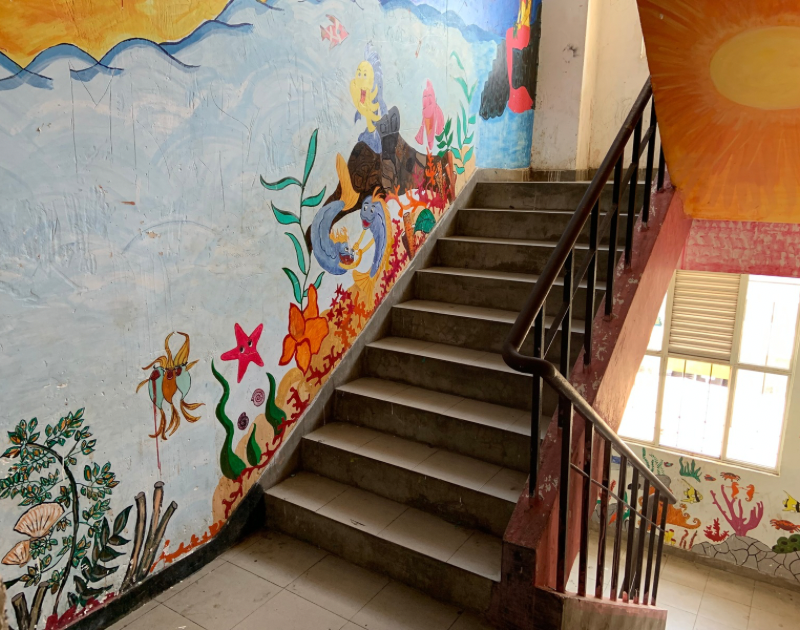
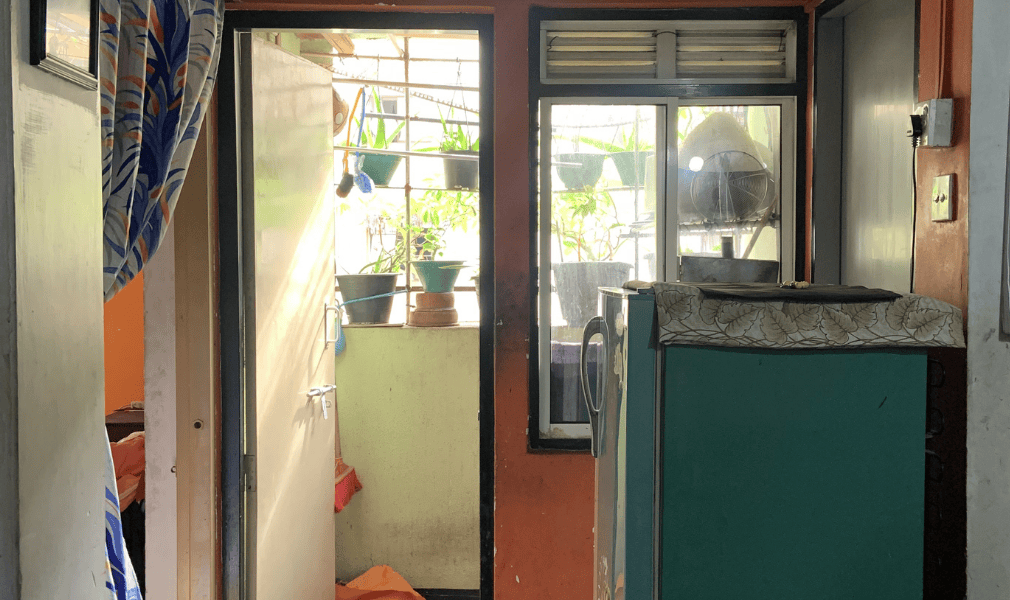
Our research with working women in low-income communities in Colombo shows that domestic worker arrangements varied. Most worked 6 days a week, with only one day of the weekend or public holidays off. Women entered domestic work when their husbands’ income became insufficient to manage household expenses. They find work mostly through word-of-mouth. Most chose to work in households closer to their residences, as it eased the care burden and reduced the costs of commuting. However, respondents relocated to high-rises had to travel further as they usually worked at homes closer to their former watte. Relocation meant longer commutes, being cut-off from bus routes, and less demand, because they no longer lived in proximity to wealthier families requiring domestic workers. The daily wage received by domestic workers was between LKR 1000 – 2000, with a monthly average of LKR 28,727. They received no sick leave, and were not paid if they were unable to come to work due to illness, injury or emergency.
Education was a limiting factor for these women in attaining better-paid jobs if they so chose- most have not completed their O/Ls. Their previous employment had also been in similar “pink-collar” jobs such as making shorteats, working in a garment factory or working as domestic servants abroad.
It was revealed that many women found the flexibility of domestic work to be attractive, specifically because it allows them to balance the carework within their own homes. Respondents shared how it allowed them to arrange their workday around their children’s school time. Working hours were between 5 and 10 hours a day, depending on the amount of work to be completed. Respondents shared that they were allowed to leave work early if they finished their tasks. They also reported that they were given the flexibility to leave their workplace to pick up children from school, attend parent-teacher meetings and breastfeed their children. However, this leads to extreme levels of time poverty and exhaustion among these women; as one respondent stated, “I fall asleep as soon as I fall on the bed. It is hard work.”
Learning from beyond Sri Lanka
In 2011, the International Labour Organisation, as part of its mission to promote a “Decent Work Agenda”, adopted the Domestic Workers Convention 2011 (C189). The convention sets a number of minimum standards for domestic workers, including freedom of association and the right to collectively bargain, and the elimination of compulsory labour, child labour and discrimination in the workplace. It also emphasises workers being informed about the terms and conditions of employment, hours of work, minimum wage, occupational safety and social security and sets standards concerning child domestic workers, live-in workers and migrant domestic workers and provides for the protection from all forms of abuse, harassment and violence. Ratified by 35 countries worldwide, the convention provides a basis upon which collectives of domestic workers mobilise worldwide for their advocacy.
Significant strides have been made in Central and South America regarding the rights of domestic workers; the Inter-American Court of Human Rights (IACtHR), in 2025, recognised care as an autonomous human right. Part of this recognition includes the “right to care”, which states that people who provide care, paid and unpaid, have the right to do so under dignified conditions, free from discrimination and with full respect for their human rights. It also explicitly references domestic workers as essential care providers, and urges states in the region to adopt measures such as mandatory written contracts, a maximum 8-hour working day, full access to social security benefits, an effective access-to-justice mechanism, labour inspection and sanctions for non-compliance and more.
In 2025, the Ministry of Employment and Labour Relations in Ghana took steps to integrate domestic workers into the Ghanaian Labour Market Information System and to ensure their enrollment in local social protection mechanisms. Regulations contain provisions concerning worker registration and written contracts, minimum wage and overtime, leave and rest, social security and lawful deductions, live-in standards, dispute resolution and more.
In India, unions like the Self-Employed Women’s Association, which consists primarily of women working in the informal sector, have been able to construct worker cooperative models that help their over 2 million members, including domestic workers, to access essential services pertaining to social security. These include cooperative schemes for banking, insurance, healthcare, housing and even childcare.
Too good to be true?
Sri Lanka’s own Domestic Workers’ Union has been demanding legal protection for domestic workers for over a decade. Their advocacy has included calls for the inclusion of domestic workers in the Wages Board Ordinance, inclusion of domestic workers in the EPF/ETF schemes and the enrollment of workers in the minimum wage law and gratuity. In 2014, they drafted the first Standard Contract to be used by employers and domestic workers. Sri Lanka’s National Social Protection Strategy provides for the expansion of social protection to better include those engaging in the informal economy. Micro-insurance and pension schemes for informal workers are recognised as priority interventions to “support labour market formalisation and long-term resilience”. More specifically, under the “Social Care” pillar of the strategy, it states the operational mechanisms to “Strengthen Care Economies and Support Informal Care givers”. It also provides for the promotion of the inclusion of informal sector workers in social insurance schemes.
However, our discussions with domestic workers from low-income communities in Colombo reveal a great deal of scepticism about the practicalities of implementing such programmes and policies. Many respondents shared how employers would not be inclined to agree to conditions, and expressed concerns about how a lack of universal implementation might disadvantage those who chose to work under such regulations. Concerns were also raised about how the introduction of schemes such as pension and insurance schemes might lead to a decrease in the monthly salary, so as to account for the “cost” incurred by employers to provide these benefits.
Way forward
Such scepticism and cynicism exist primarily because of the perception of domestic work itself; whether paid or unpaid, performed by family members or an external worker, domestic and care work is rarely considered to be “work” at all. It is feminised, “women’s” work and is therefore invisible and undervalued. As such, in order to truly support domestic workers’ rights, domestic and care work must be recognised socially, legally, and within policy, as foundational to the functioning of our cities and our economies, and thereby, worthy of being recognised as dignified work. Workers who provide these services should be entitled to the same rights, benefits and safeguards enjoyed by any other worker. Their labour enables their employers to work full time jobs and retire with pensions, benefits and other safeguards; while domestic workers show little to no savings, no pensions or safety nets when they are at an age they should retire – with many then continuing to work well beyond their capable years as they need the income.
Advocacy for the rights of domestic workers is intersectionally challenging due to the compounding dynamics of ethnicity, gender and class governing employee-employer relationships. However, parallel awareness-raising on dignified, fair and just work can pave the way for the recognition of their rights as well as for the core, foundational labour they perform to uplift our cities and our economies.
References
Department of Census and Statistics, Ministry of Finance, Economy and Policy Development. 2020. ‘Sri Lanka Time Use Survey Final Report – 2017’. https://www.statistics.gov.lk/Resource/PressReleases/TUS_FinalReport_2017.pdf
Department of Census and Statistics, Ministry of Finance, Planning and Economic Development. 2025. ‘Sri Lanka Labour Force Survey Annual Report – 2024’. https://www.statistics.gov.lk/LabourForce/StaticalInformation/AnnualReports/2024
Department of National Planning, Ministry of Finance, Planning and Economic Development. 2025. ‘Sri Lanka National Policy Strategy’. https://www.treasury.gov.lk/api/file/bd5f42bd-00a3-4eda-9fbc-03e898fe35ba
International Domestic Workers’ Federation. 2023. ‘Sri Lanka Domestic Workers Union’s Standard Contract’. https://idwfed.org/my-fair-home/sri-lanka-domestic-workers-unions-standard-contract/
International Domestic Workers’ Federation. 2025. ‘Care: From Invisible to a Human Right
Unprecedented achievement for domestic workers in the Americas’. https://idwfed.org/news/care-from-invisible-to-a-human-rightunprecedented-achievement-for-domestic-workers-in-the-americas/
International Domestic Workers’ Federation. 2025. ‘Major Stride in Ghana: Government Moves to Enforce Domestic Workers’ Rights’. https://idwfed.org/news/major-stride-in-ghana-government-moves-to-enforce-domestic-workers-rights/
International Labour Organization. ‘Convention Concerning Decent Work for Domestic Workers’. 16 June 2011. https://www.un.org/en/development/desa/population/migration/generalassembly/docs/globalcompact/ILO_C_189.pdf
National Minimum Wage of Workers Act No 3 of 2016. 2016 https://www.srilankalaw.lk/gazette/2016_pdf/Act%20No.%2003.pdf
Perera, Iromi and Meghal Perera. 2025. Social Protection and Urban Infrastructures of Care in Colombo, Colombo Urban Lab – Centre for a Smart Future. https://www.csf-asia.org/wp-content/uploads/2026/01/Social-Protection-and-Urban-Infrastructures-of-Care-work-in-Colombo_Jan-2026.pdf
Perera, Iromi, Nimaya Dahanayake and Meghal Perera. 2024. Built on Sand – A Review of Colombo’s Urban Regeneration Project. Colombo Urban Lab – Centre for a Smart Future. https://www.csf-asia.org/wp-content/uploads/2024/11/Colombo-Urban-Lab-review-of-the-URP_Nov-2024.pdf
Self Employed Women’s Association. 2026. SEWA’s Services. https://www.sewa.org/sewa-services/
Verité Research. 2015. ‘Sri Lanka: Domestic Workers – An Analysis of the Legal and Policy Framework Decent Work for Domestic Workers: Report No. 1’. https://www.veriteresearch.org/wp-content/uploads/2018/06/Sri-Lanka-Domestic-Workers-Legal-Policy-Framework-No.-1.pdf