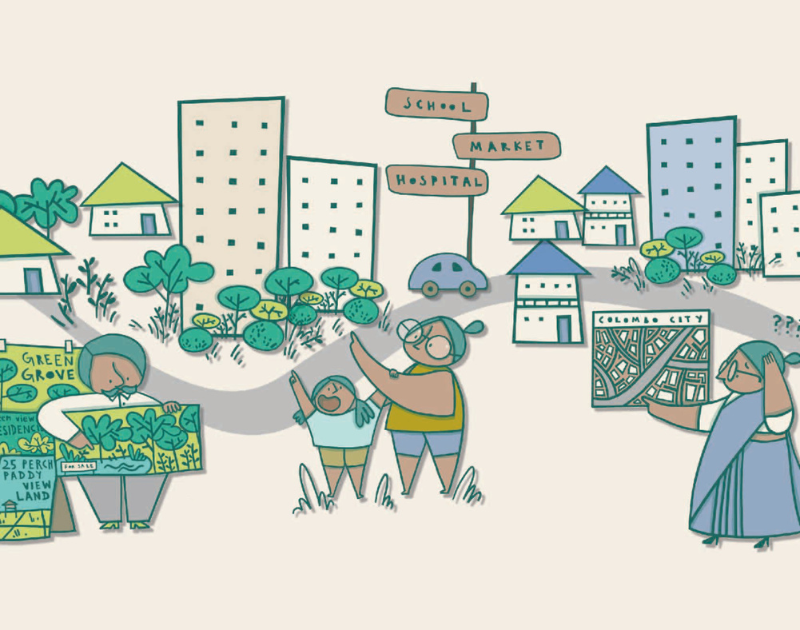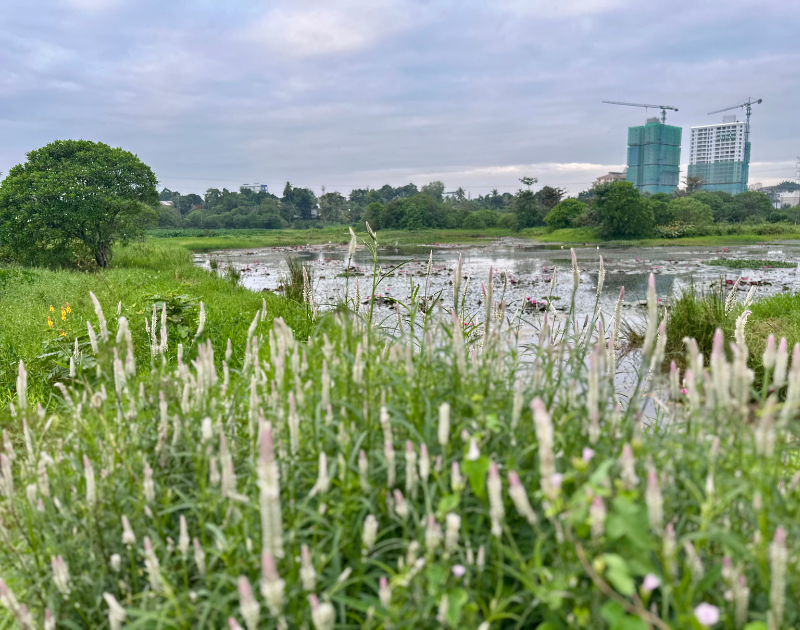

Colombo’s suburbs have become some of the city’s most desirable places to live. People are drawn to their wetlands, paddy fields, tree cover and quieter neighbourhoods – qualities that offer respite from the increasingly dense urban core. Yet the very demand for these landscapes is driving a wave of real estate and infrastructure development that is rapidly transforming them.
As wetlands are filled, green spaces fragmented and neighbourhoods reshaped, we are faced with fundamental questions: Can the city continue to grow without losing the ecosystems that make it resilient and liveable? How can city planning better reflect the needs of the people who already live in these neighbourhoods? How can we as residents and property buyers make better choices? Using Thalangama and surrounding suburbs as a lens, we are now exploring how these tensions are playing out on the ground, and what they reveal about the future of Colombo’s growth.
Panel discussion:
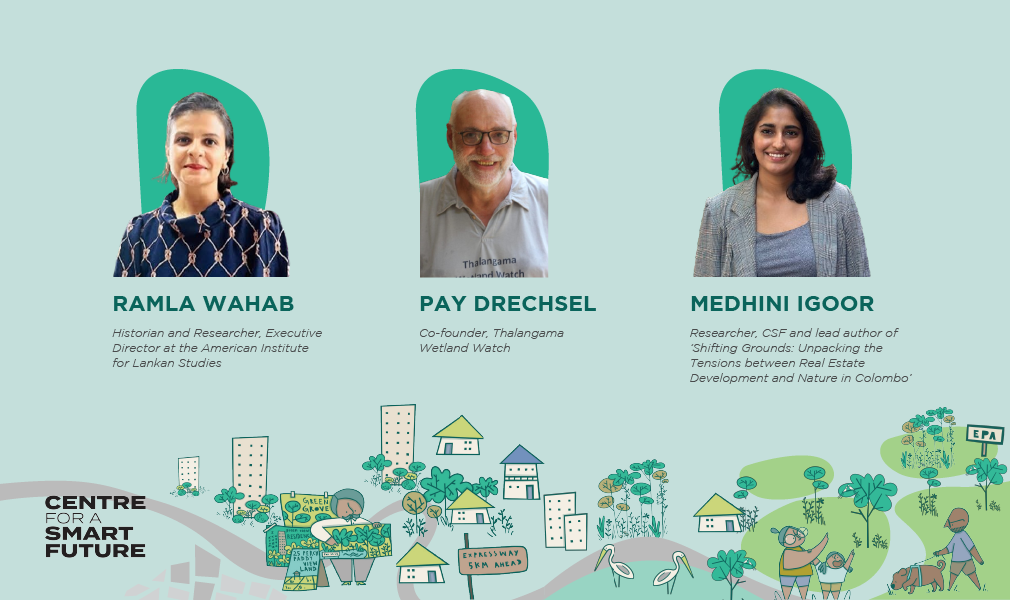
Drawing from research by Centre for a Smart Future, coupled with insights from a historian and a community activist, a panel discussion brings together three complementary perspectives on Colombo’s evolving relationship with nature. The discussion will trace how the city’s development has changed over time, how these changes are experienced in everyday life, and what they reveal about the choices shaping Colombo’s future.
The panel will feature Ramla Wahab (Historian and Researcher, Executive Director at the American Institute for Lankan Studies), Pay Drechsel (Co-founder, Thalangama Wetland Watch) and Medhini Igoor (Researcher, CSF), and will be moderated by Ashanee Kottage (Researcher, CSF).
Related resources:
To support further exploration of the themes, we have compiled a selection of related resources below.
As Colombo continues to expand, decisions about land use, infrastructure and development will shape the city’s future. We hope to encourage greater public engagement with these issues, connect research with lived experience, and foster conversations that can inform more inclusive, ecosystem-sensitive approaches to urban growth.