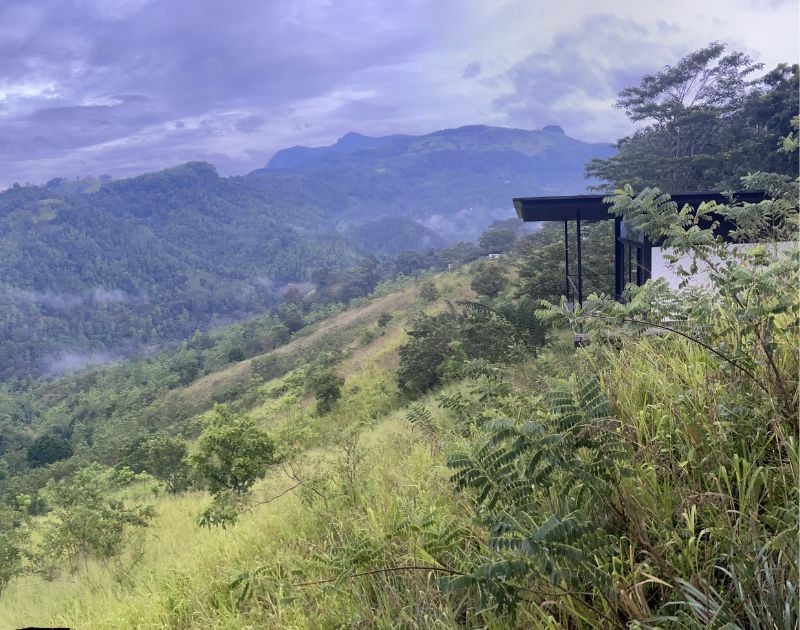

In June 2025, the Sri Lanka Tourism Development Authority (SLTDA) announced that 3,000 acres of state land had been identified across coastal regions to be leased for tourism investment. The program, described as a drive to attract USD 60 million in investment, aims to fast-track tourism infrastructure and promote regional development. Lands have been advertised as “ready for development,” supported by a new Land Bank Management Information System (LBMIS) that links directly with the SLTDA’s Investor Relations Unit.
The ambition was quite clear as it sought to simplify procedures, offer transparent titles, and make Sri Lanka an easier place to invest. Yet experience shows that when large-scale land leasing for tourism is pursued without adequate preparation, it tends to repeat familiar mistakes. Previous ventures from Dedduwa and Pasikudah have followed the same pattern where proposals are announced with enthusiasm, investors are selected, and years later, development remains stalled. To understand why, we look to the example of Kalpitiya, drawing from CSF’s site-level research.
The Kalpitiya Promise and Its Stagnation
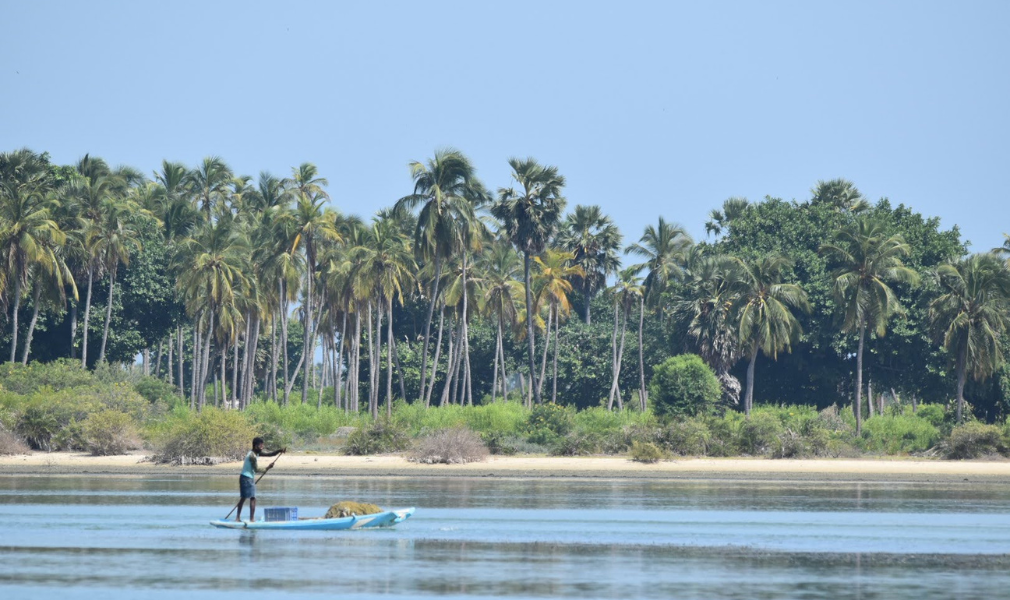
In 2010, soon after the civil war ended, the SLTDA launched the Kalpitiya Integrated Tourism Resort project(KITRP), identifying 14 islands on the northwest coast and leasing several of them already to private investors. The plan projected 4,000 new rooms and 15,000–18,000 jobs, covering roughly 5,000 acres of land. Even by 2011, the uptake was poor and the Government indicated there were not satisfied with the investors who had expressed interest. More than a decade later, most leases remain inactive and data compiled in 2023 show that construction had not begun on most islands. Investors cite pending environmental approvals, unclear seabed rights, and community opposition. In several cases, lease agreements were signed but no physical work commenced. On Ippantivu Island, disputes with local residents led the developer to request alternate land. On Vellai Islands I–III, approvals for over-water bungalows were still pending. On Uchchamunai, allegations emerged that agreements were concluded without proper environmental studies.
As delays continued, the SLTDA and the Ministry of Tourism began issuing ultimatums to investors. SLTDA told investors that leases would be cancelled for all stalled Kalpitiya Island projects if development failed to commence by Q3 2024. SLTDA Chairman Priantha Fernando noted that although the authority had previously accommodated delays due to the economic crisis, it had now begun to “exert pressure” on lessees, making clear that “develop, or we will cancel the lease” was the new operating principle.
For Ippantivu, authorities signaled that the land could be taken back if progress was not made, and in Uchchamunai, the Board of Investment issued an ultimatum demanding that the investor expedite the signing of the lease agreement after long periods of inactivity. Further reinforcing this shift, the government in August 2025 has revived plans to lease out Baththalangunduwa and Uchchamunai for 30-year tourism development agreements – lands that had previously seen community protests and stalled proposals. Despite our efforts to obtain the latest updates on these from the SLTDA leadership, the information has not been forthcoming.
This stagnation is reflective of the weaknesses in the overall land-lease and tourism-development approach itself – ecological, infrastructural and institutional.
Environmental and Infrastructure Constraints
The Kalpitiya islands are low-lying, storm-exposed, and water-scarce. Several planned sites lacked freshwater access or were located near degraded mangrove ecosystems. Earlier shrimp farming had already cleared over half the mangroves between 1992 and 1998, and subsequent replanting achieved survival rates of only 18–22%.Infrastructure deficits further compounded the problem. The Kalpitiya Urban Development Plan (2018)recorded that only 54% of the area’s daily water requirement is met, leaving a 3.5-million-litre shortfall per day. Additionally, solid waste generation reaches 132 metric tons daily, but the single waste-management center was built for just 5 tons and simply cannot cope with the volume. In this whole process, sewerage systems are virtually absent, and health services are minimal considering that a 40-bed hospital with only a few doctors serves thousands of residents and visitors. The KITRP assumed that investors or the state would fill these gaps, but neither did. Without adequate utilities or environmental safeguards, projects became financially and ecologically unviable.
Social Conflict and Exclusion
Perhaps most damaging were the social consequences. Planning for Kalpitiya was largely top-down, focused on investor needs rather than community realities. Reports by local and international civil-society groups, including the Economic, Social and Cultural Rights Network (ESCR-Net) and NAFSO, documented violations of residents’ economic and cultural rights. Communities on islands such as Uchchamunai, home to roughly 300 families, were not meaningfully consulted. Many residents feared displacement or loss of access to fishing grounds. In one instance, fences were erected across traditional pathways after rumors of upcoming resort construction. As frustrations built up, fisherfolk protested the Ippantivu lease, arguing that tourism activity restricted their daily work and lagoon access. Local mediation efforts failed, and the project never began.
These tensions underscore that tourism development cannot succeed without local legitimacy. When livelihoods are threatened, projects face protests, legal disputes, and reputational damage. Evidently, the Kalpitiya experience eroded trust not only between investors and communities, but also between communities and the state.
Institutional Bottlenecks and Regulatory Weaknesses
Even well-intentioned projects have struggled with bureaucratic complexity. Environmental clearances for large developments can take six to nine months, passing through multiple agencies such as the Coastal Conservation Department, Central Environmental Authority, and Urban Development Authority (UDA). Each of these agencies operate under different mandates and datasets, often without coordination. Environmental Impact Assessments (EIAs), though legally required, frequently fall short as meaningful safeguards. A review of 100 EIA Stage 1 reports by the Centre for a Smart Future (CSF) found that 40 reports lacked data sources, 55 had no citations, and 76 did not state methodological limitations. Only 12 offered a balanced view of both positive and negative impacts. Social analysis was minimal, they were typically assigned to one or two team members and more than half the reports ignored indicators such as age, gender, and disability. Cumulative impacts from neighboring projects were rarely assessed. As a result, authorities lacked credible data to monitor change, while communities lost their main avenue to challenge harmful development.
A Framework for Doing It Differently
To avoid repeating these cycles, CSF proposes a Sustainable Tourism Land Lease Framework, developed through fieldwork in Kalpitiya. This framework enables a layered understanding of a destination’s tourism potential. It emphasizes co-discovery – a collaborative process where government, investors, and communities jointly assess readiness before land is leased. The framework examines two dimensions: 1) Demand-side indicators – understanding who visits, why they come, and how they interact with local ecologies; and 2) Supply-side indicators – assessing local governance, economy, culture, and infrastructure readiness.
Demand-side: In Kalpitiya, roughly half the tourists are foreign kite-surfers who stay two to three months on low-budget, eco-friendly packages. They are not the high-spending, short-stay clientele envisioned by the KITRP. By attempting to create a Maldives-style luxury model, the actual visitor profile was completely overlooked.
Supply-side: Kalpitiya’s local council has only two technically qualified officers and limited coordination with other agencies. As previously mentioned, waste collection and water systems are inadequate leading to the power supply being unstable and training opportunities being extremely scarce. Through all this, tourism does exist, but it operates informally and unevenly across several different communities.
By combining these insights, the framework helps identify whether a site is ready for development or whether other forms of land use would be more appropriate. It aims to move beyond financial metrics in order to include ecological compatibility, infrastructure capacity, and social licenses.
Applying the Framework to Future Land Leases
Under this approach, the state would use readiness indicators before advertising lands. Each site could be assessed across three dimensions – environmental, infrastructural, and institutional in order to determine suitability. Integrating this data into the Land Bank Management Information System would make information available to investors upfront. This would include things like maps showing infrastructure gaps, water availability, and key community stakeholders. This kind of transparency can prevent costly mismatches and promote partnerships with local actors.
The framework also proposes measurement and evaluation metrics after leasing, ensuring that projects meet public goals. These indicators could track employment generation, waste management, ecosystem health, and community benefit-sharing. Most importantly, it advocates for smaller-scale, community-rooted tourism such as eco-lodges, homestays, and cooperatives over mega-resorts that tend to displace people and overstrain resources. It is important to note that this is not an anti-investment stance but rather it is a call for better investment. Low-impact, place-based tourism can achieve quicker implementation and stronger local support while protecting fragile ecosystems.
Private developers, too, have lessons to draw. Kalpitiya illustrates how entering a site without understanding its ecological and social context leads to prolonged delays and losses. Using the readiness framework as a due-diligence tool helps identify environmental constraints, community expectations, and regulatory hurdles early on.
Projects that aim to align with local identities such as kite-surfing, mangrove restoration tourism, or lagoon-based ecotours can create shared value rather than conflict. In that same vein, investors who engage communities as partners build credibility with regulators, funders, as well as future visitors.
Streamlined Leasing Without System Readiness
Sri Lanka’s push to lease new lands for tourism comes at a pivotal time. The sector needs revitalization, and private investment will play a key role. The government’s new land-bank model aims to reduce red tape and attract investment swiftly. However, speed without preparedness is undoubtedly costly. Efficiency does not mean sustainability. The Kalpitiya example shows a clear picture of how leasing without readiness leads to capital stagnation, idle land, and declining investor confidence. We see that when local participation and ecological limits are ignored, tourism development becomes extractive rather than regenerative. In the long term, the risks continue to multiply and we see more environmental degradation, loss of trust in institutions, and missed opportunities for equitable growth.
If these lessons are ignored, new tourism zones risk becoming a patchwork of idle lands rather than thriving destinations. Before the next tranche of leases is signed, Sri Lanka has a chance to do it differently.
This article draws from Centre for a Smart Future’s forthcoming policy brief on tourism land leases in Sri Lanka, based on research by Ashanee Kottage (Visiting Researcher, CSF) as part of CSF’s broader work on Inclusive and Sustainable Tourism.
Cover image courtesy (c) Anushka Wijesinha for CSF