
Digital micro loans have proliferated among urban communities as the need for faster cash to respond to household urgencies amidst economic strains, has collided with the growing use of smartphones, mobile apps and social media. But little is known about how they operate, who they affect, and what risks are borne by borrowers. A new report by CSF examines the rise of digital micro lending services, the household needs driving their use, their opaque terms, hidden costs, data privacy risks and aggressive collection techniques.
Following Sri Lanka’s 2022 economic crisis, the pandemic, and natural disaster related shocks, vulnerable populations have dealt with rising living costs and increasingly unstable incomes, leading to a higher dependence on debt even for essentials and day to day expenses. Those who turn to digital microloan providers, often already economically vulnerable and hard hit by shocks, say banks and other financial institutions either don’t offer a fast enough turnaround in time-sensitive situations, or require collateral, documentation, and guarantees which they may not have access to. This requirement for quick and easy loans coincides with growing access to mobile phones, the internet, and social media, providing a new avenue for borrowers and lenders to connect.
Combining qualitative interviews with a deep-dive review of the major digital microloan providers in Sri Lanka the report aims to outline who uses these services and what for, how these companies operate and promote their services, and what risks are faced by borrowers. The report also includes an analysis of online resistance to the practices of digital lending services.
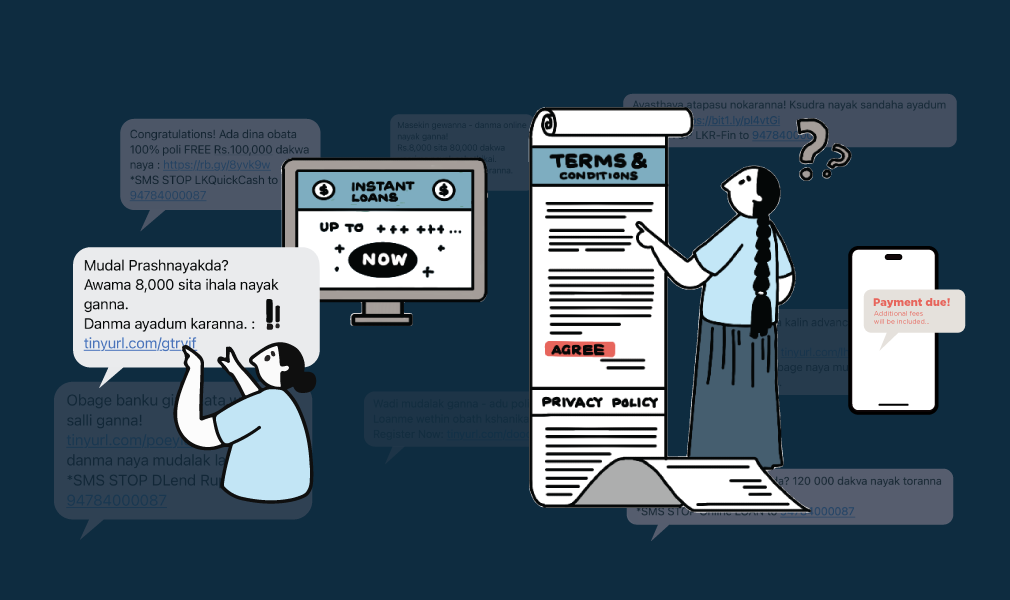
The report exposes how digital microloan services approach potential borrowers via text message or social media advertising with language and imagery highlighting speed, urgency, and ease of obtaining loans through their service. Potential borrowers are often unaware of the actual terms of the loan they receive, as the services often use misleading and predatory advertising, and opaque terms of use to lure in borrowers. This is accompanied by problematic collection techniques and hidden costs.
Loans are often advertised as interest-free, but contain numerous transaction and late fees that remain unclear to the borrower, even after the loan has been granted: collectors only disclose the sum to be paid back, not the breakdown of fees nor how they accrue. The actual terms are only visible if borrowers read through separate documents outlining terms and conditions, though these are often not available in Sinhala and Tamil.
The report reveals instances of harassment of borrowers during debt collection processes, with interviewees describing experiences of incessant phone calls and messages, verbal abuse, and threats of legal action, leading to psychological distress. It also outlines how lenders approached borrowers’ family, friends, neighbours, workplace, and other contacts about collecting overdue loans, leading to damage to the borrower’s reputation. In the midst of such harassment, borrowers are sometimes forced to take out additional loans from other digital loan services to pay back their original loan, leading to a cycle of indebtedness.
The report also raised concerns about personal data privacy as digital loan apps request numerous permissions on users’ mobile devices, including access to call logs and contacts, photos, and other information. The report observes that, per Sri Lanka’s Personal Data Protection Act, the requirements for these permissions are not sufficiently explained in digital microloan providers’ policies, nor is it sufficiently explained what data is collected through them and what the data will be used for, or what third parties they will be shared with.
Despite all this, users of digital microloans say that these companies provide a necessary service which banks cannot offer, covering short-term shortfalls or emergency expenses, especially for those who are excluded from the traditional banking system. They argue that with more transparency in terms and less harmful loan collection methods, it would be a valuable system.
Ultimately however, digital microloan providers exist in a regulatory black hole. The report emphasises that there is no existing institution that regulate these companies. They do not come under the mandate of the Central Bank, which only governs deposit-taking institutions. The newly enacted Microfinance and Credit Regulatory Act has the potential to regulate digital lenders, but the authority which would oversee enforcement has not yet been established. The Act is also reportedly being amended, which may lead to further delays. There also needs coordination with agencies beyond financial regulators. Given the problematic aspects around personal data privacy, cyber-bullying, and cross-border fintech activity, effective oversight requires a more coordinated and joined-up approach.
The forthcoming report, titled ‘In the Shadows of Fast Credit: Examining Digital Micro Lending in Sri Lanka’, puts forward recommendations for tightening the regulatory framework around these services, and encourages better coordination between financial regulators, data protection authorities, cybercrime agencies, and law enforcement. The report also highlights the need for strengthening digital literacy and better social protection, especially among vulnerable populations.
The report releases on Monday 2nd November, and will be available on this page.
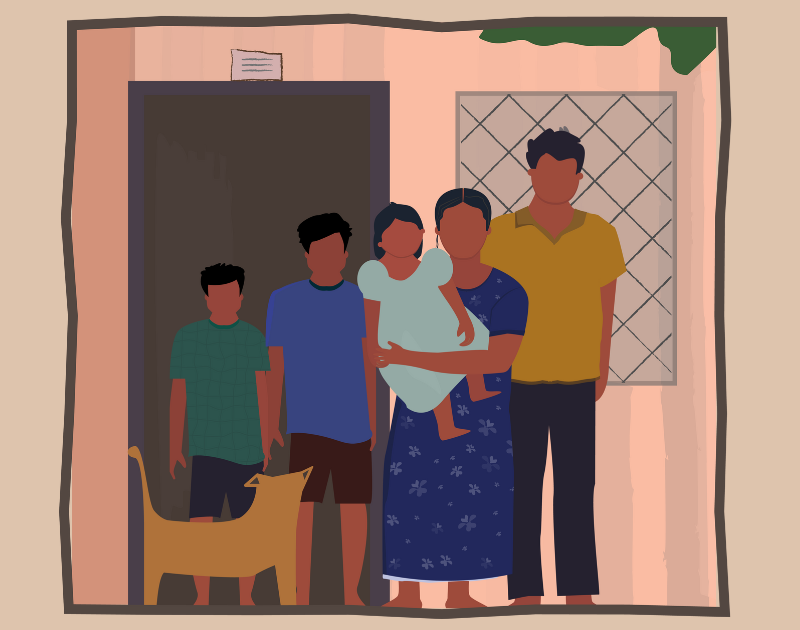
Cover image created by Sewwandi Koonthota for Centre for a Smart Future. Do not reuse without permission.